





The motivation behind the development of theories
Contents |
[edit] What motivates the development of theories ?
Whilst there are behavioural theories behind what motivates people, this article is concerned about what the motivations are behind developing theories themselves. Theories are motivated by a variety of factors and can serve different purposes depending on the field of study. Here are some common motivations behind the development of theories:
[edit] Theory as explanation
Explanation: One of the primary motivations for developing theories is to provide explanations for observed phenomena or events. Theories attempt to uncover the underlying principles, mechanisms, or relationships that can account for a particular phenomenon. For example, in physics, the theory of gravity explains why objects are attracted to each other.
[edit] Theory as prediction
Prediction: Theories are often developed to make predictions about future events or to describe patterns observed in data. By formulating a theory, researchers can make informed predictions about the behaviour of a system or the outcome of an experiment. For instance, in economics, theories of supply and demand are used to predict how changes in price and quantity will affect markets.
[edit] Theory as understanding
Understanding: Theories aim to deepen our understanding of a subject by organising and connecting existing knowledge. They provide frameworks that help researchers and scholars make sense of complex phenomena and integrate information from various sources. Theories can synthesise disparate observations and provide a coherent framework for interpreting data.
[edit] Theory for practical application
Practical Applications: The development of theories is often driven by the desire to solve real-world problems and improve human life. Theories can provide the foundation for the development of technologies, strategies, or interventions that address societal challenges. For example, in medicine, theories about the mechanisms of diseases are used to develop treatments and preventive measures.
Designing Buildings has a number of pages that are filed under the category of Theory
[edit] Related articles on Designing Buildings
- Adaptability.
- Adaptation.
- Intergovernmental Panel on Climate Change.
- Game theory and construction.
- Leadership styles.
- Motivation.
- Relationship management.
- Team behavioural roles.
- Team building.
- Theory.
- What we know about wellbeing.
[edit] External Links
https://www.youtube.com/watch?v=Zas5GXR_m9I&feature=youtu.be
Featured articles
Check out some of the best features and news from Designing Buildings as well as key stories from around the web.

Why construction can't afford to ignore the skills gap.
Building Safety Regulator, 19 August

Gill Kernick appointed Independent Chair of Residents’ Panel.
Connecting knowledge, technology and conservation
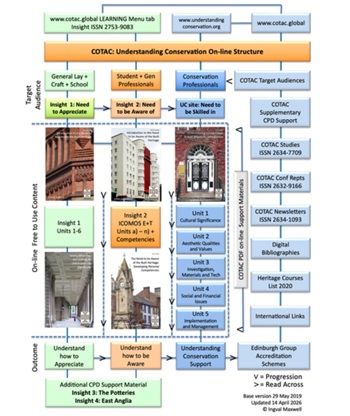
Building competence for the future of built heritage.
Building Regulations and Building Safety Act

CIOB publishes free advice for non-domestic clients.

Building Safety Newsletter from MHCLG.

An extraordinary record of steel engineering worldwide.

Households living near new pylons to save on bills.

ECA warns growth must not outpace grid capacity or skills.
The role of the client and decision making

CIOB response to built environment professions call for evidence.
Construction's sustainability reporting revolution

Tracking upfront embodied carbon with digital tools.
ECA welcomes procurement reforms

Public spending must back British jobs and skills.
Campaigning for Edinburgh: the Cockburn Association 1875-2049

The role of the civic voice in protecting character. Book review.